Pleo — A new homepage

Repositioning the product with a new storefront

With the brand evolving and moving from SMB to Mid-market, the existing homepage had become outdated, failing to reflect three years of product progress. I led the overhaul of the visual expression and narrative structure to better articulate our value proposition: "Pay, Manage, Optimise."

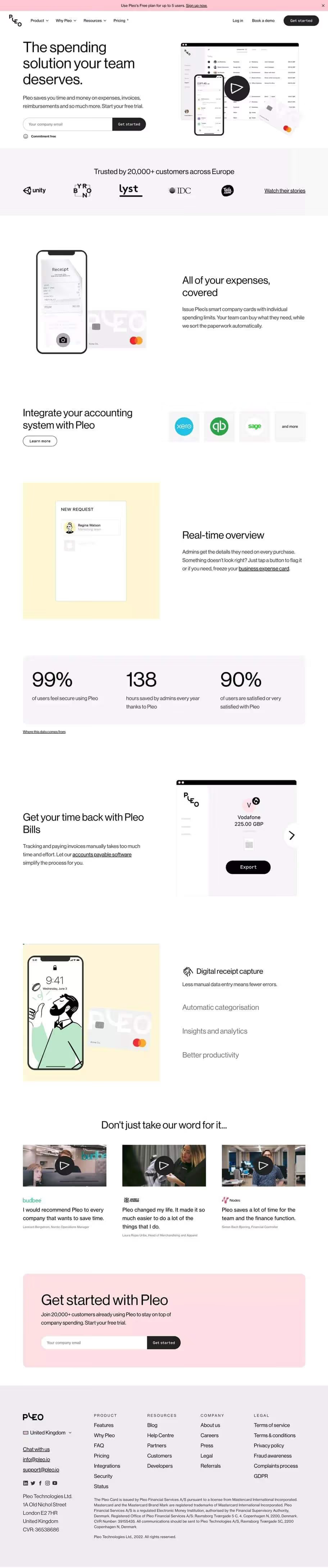
Before
An image of the old Pleo homepage on desktop
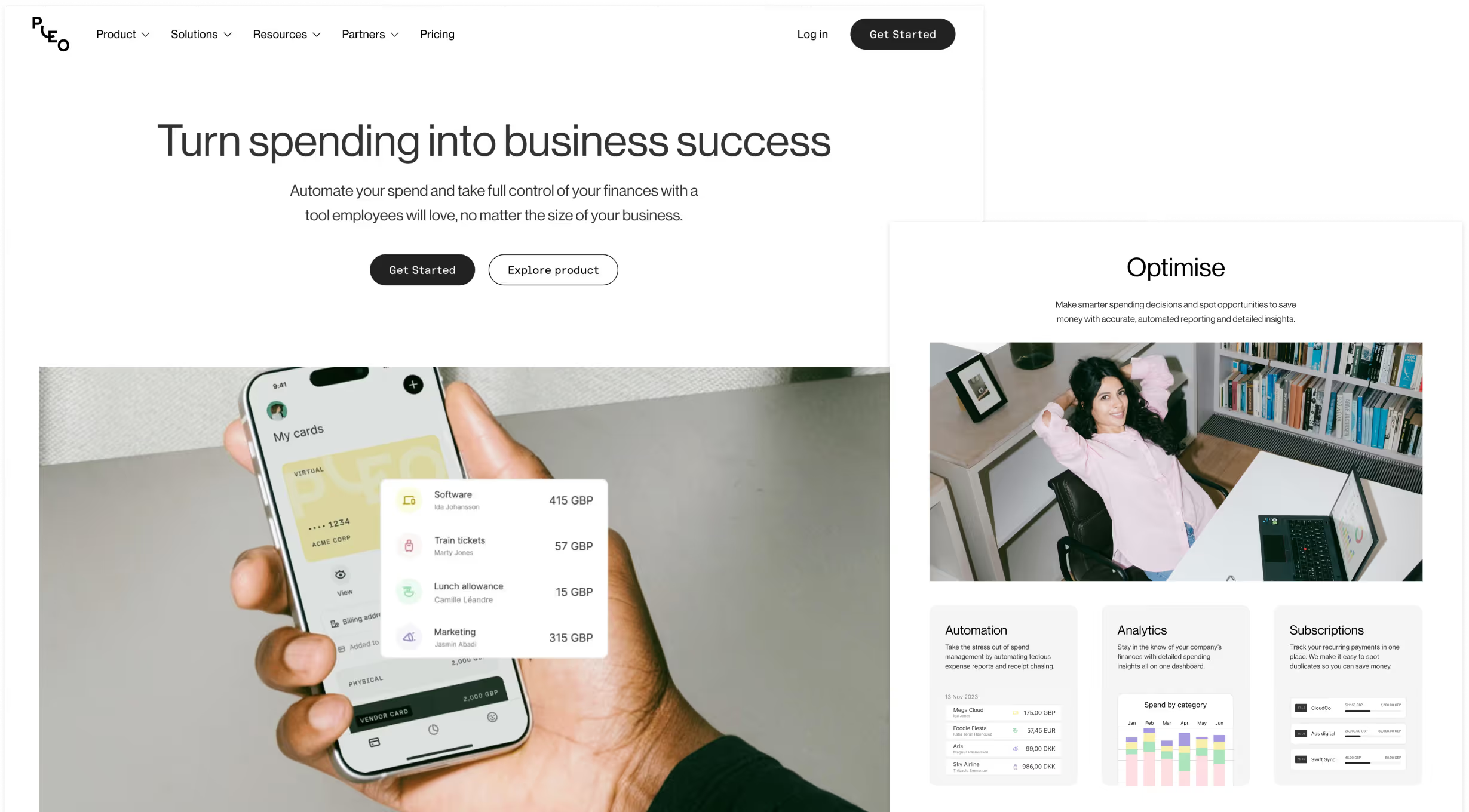
After
An image of the new Pleo homepage on desktop

Impact

30%
Increase in conversion
15%
Increase in average value per visit
£142K
Estimated MRR increase

The challenge

Shifting the narrative

The Pleo homepage had not seen a major update in three years. As the company strategically moved "upmarket" to target mid-market companies, our digital presence lagged behind.

From previously conducted user research we knew we faced significant misconceptions in the market, specifically that Pleo was a bank or merely a tool for small, work-related expenses or simply a "credit card" provider rather than a holistic spend management platform. We needed to shift the narrative to prove we were a credible, professional financial tool for larger organisations.

Core issues

  • Product information was three years out of date
  • Information was difficult to update quickly especially across numerous different markets in different languages
  • Customer expectations were not being met which led to churn further down the funnel
  • The value proposition didn’t match our move into mid-market.

Constraints

  • Do No Harm: The primary constraint was to refresh the brand without negatively impacting our core conversion rates (CVR) to sign-up
  • Risk Management: We could not simply "flip the switch." A soft rollout strategy was mandatory to monitor KPIs closely before reaching 100% traffic
  • Time: We operated under a strict 8-week test duration to achieve statistical significance before a full rollout
  • Given that this project would roll out to 15 different markets in different languages with different narratives it would need to be very 'modular' and easy to iterate upon in our CMS to accomodate this.

Scope

  • In Scope: Narrative structure, visual hierarchy, product imagery, and trust markers
  • Out of Scope: Global elements such as the navigation header and footer. These had already been recently redesigned in line with the up to date value proposition.

Research

The desktop return

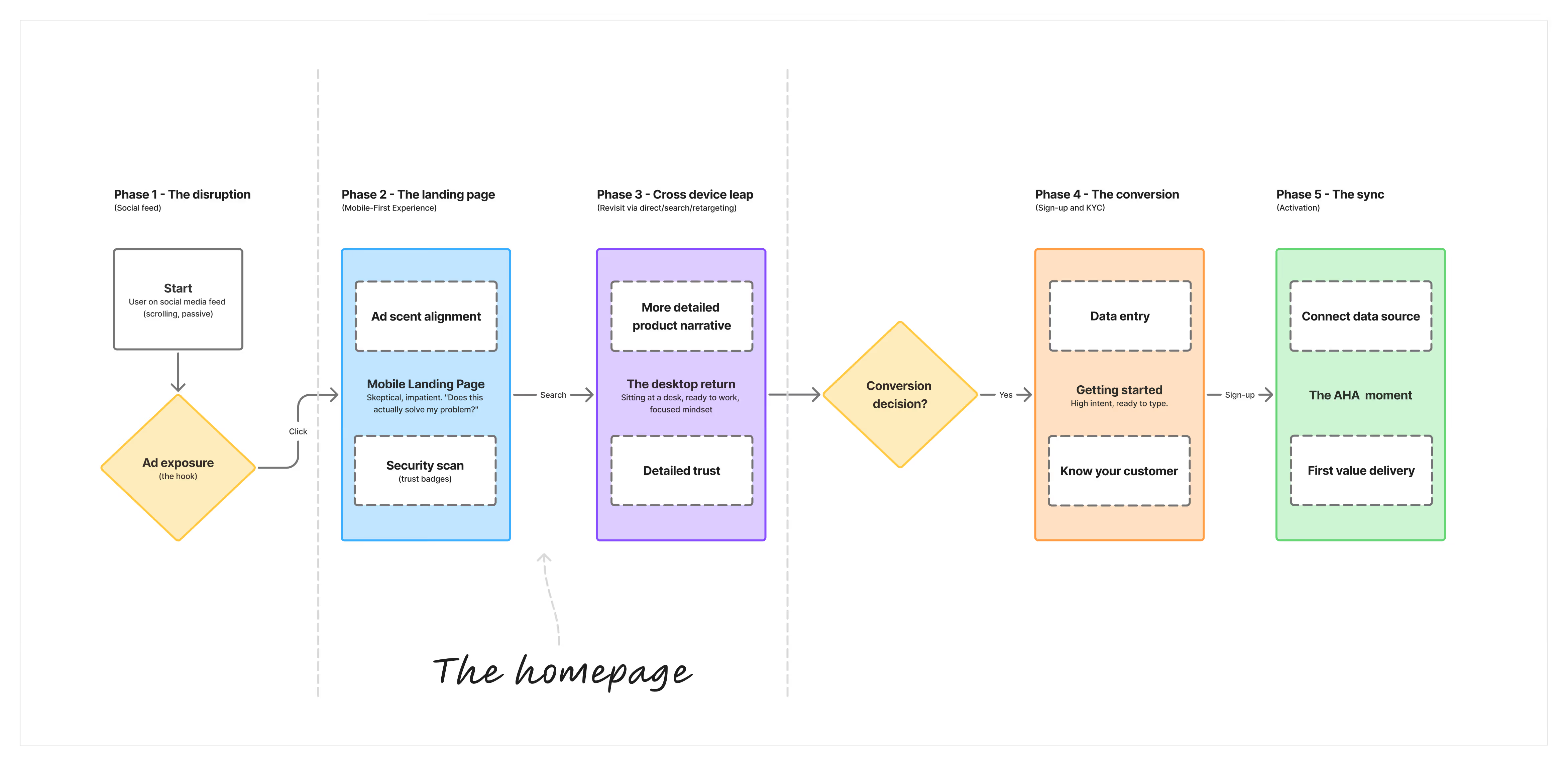
A homepage, like any page doesn’t exist in isolation. It is of course one step in a wider acquisitional user journey.

In collaboration with our CRO team I looked at our analytical data and it was clear that our main source of acquisition came from social ad campaigns on mobile devices. Users would by and large see an ad whilst scrolling on social feeds then click through to a specific campaign landing page. They would then return later on desktop either by typing the main Pleo URL into the browser or by searching for Pleo.

Our analytics data combined with anecdotal data from speaking with customers also showed that the ability to integrate existing bookkeeping and user management software into our product was a key factor in decision making.

Key considerations

  • Any marketing landing pages used in ad campaigns should align with the new homepage so users making the ‘cross device leap’ as part of their journey would get a consistent experience
  • The new homepage design should be flexible and modular so that stakeholders could quickly fire up specific landing pages for their campaigns and then iterate on them, design should not be a bottleneck here
  • Mobile should not be an afterthought here, quite the contrary, the first impression of the website will mostly be on mobile so again the experience must be consistent.
An image of the user journey map
A simplified look at a typical acquisitional user journey.

The Solution

Lead with product clarity

Put simply the heart of this project was information, or more correctly: communicating the right information at the right time so potential customers could make an informed decision.

Some of the core ares we focused on where:

The hero

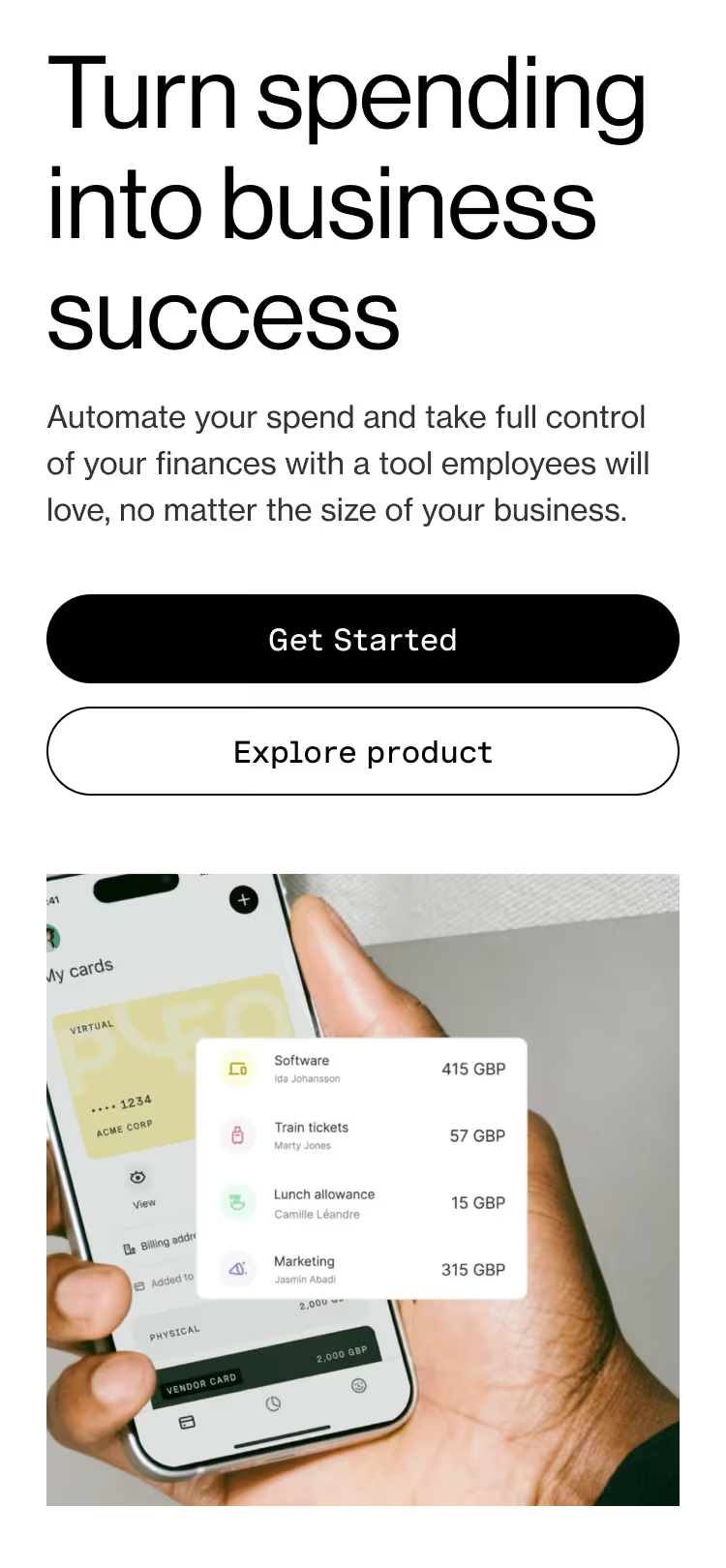
I had already designed and tested out a new hero design as part of an interactive demo initiative. This new hero not only tested well for increased product awareness but also allowed us to introduce the new product demo (via CTA) into the acquisitional flow. We brought this new hero into the new homepage project (with a few tweaks to the CTA pattern) incorporating a video that give a tease into the product dashboard without a cognitive overload.

Integrations

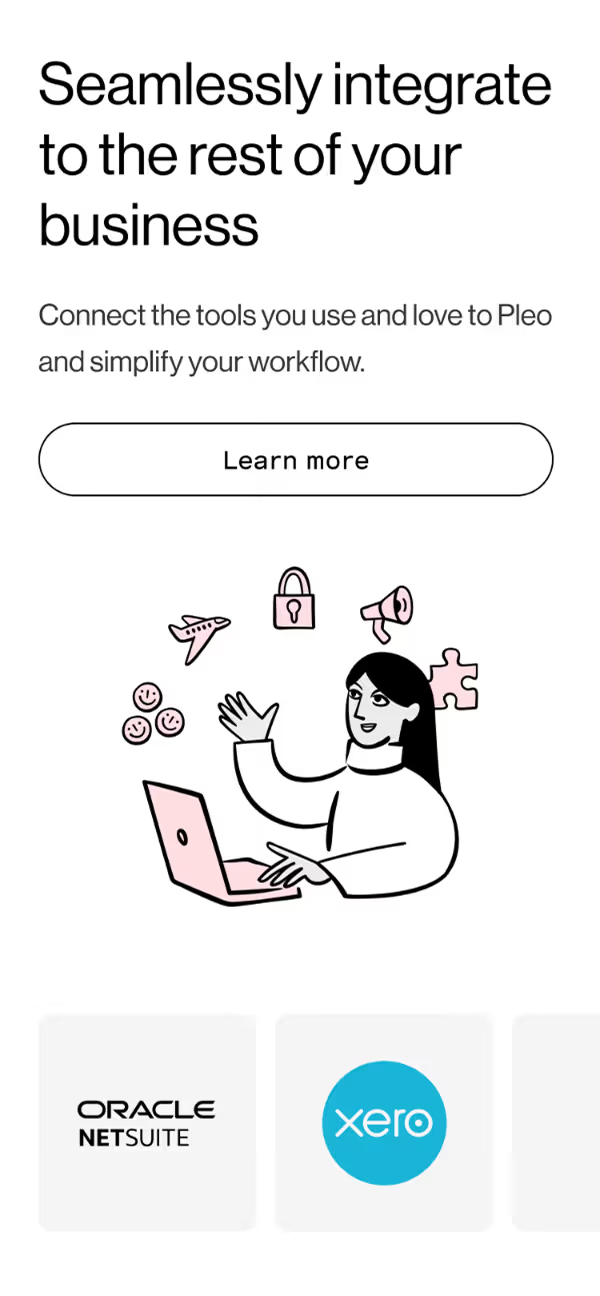
As previously mentioned, integrations are a key deciding factor for potential customers. We gave this more prominence than on the previous homepage, allowing leads to see a more comprehensive overview of the integrations we offered.

Value props

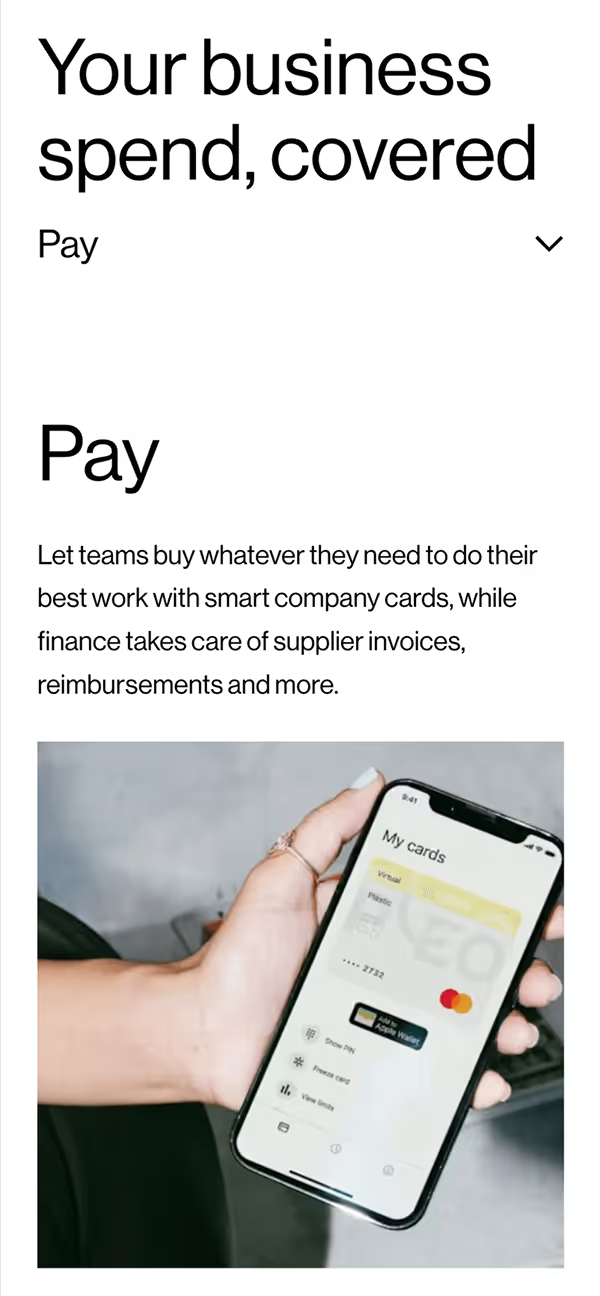
Centring the new narrative structure on the value proposition pillars of "Pay, Manage, Optimise" moved us away from a feature-list approach to a solution-oriented story that would hopefully encourage potential customers to discover more and then see themselves in the story we were telling.

An image of the hero section on mobile
An image of the integration section UI on mobile
An image of the page UI on mobile
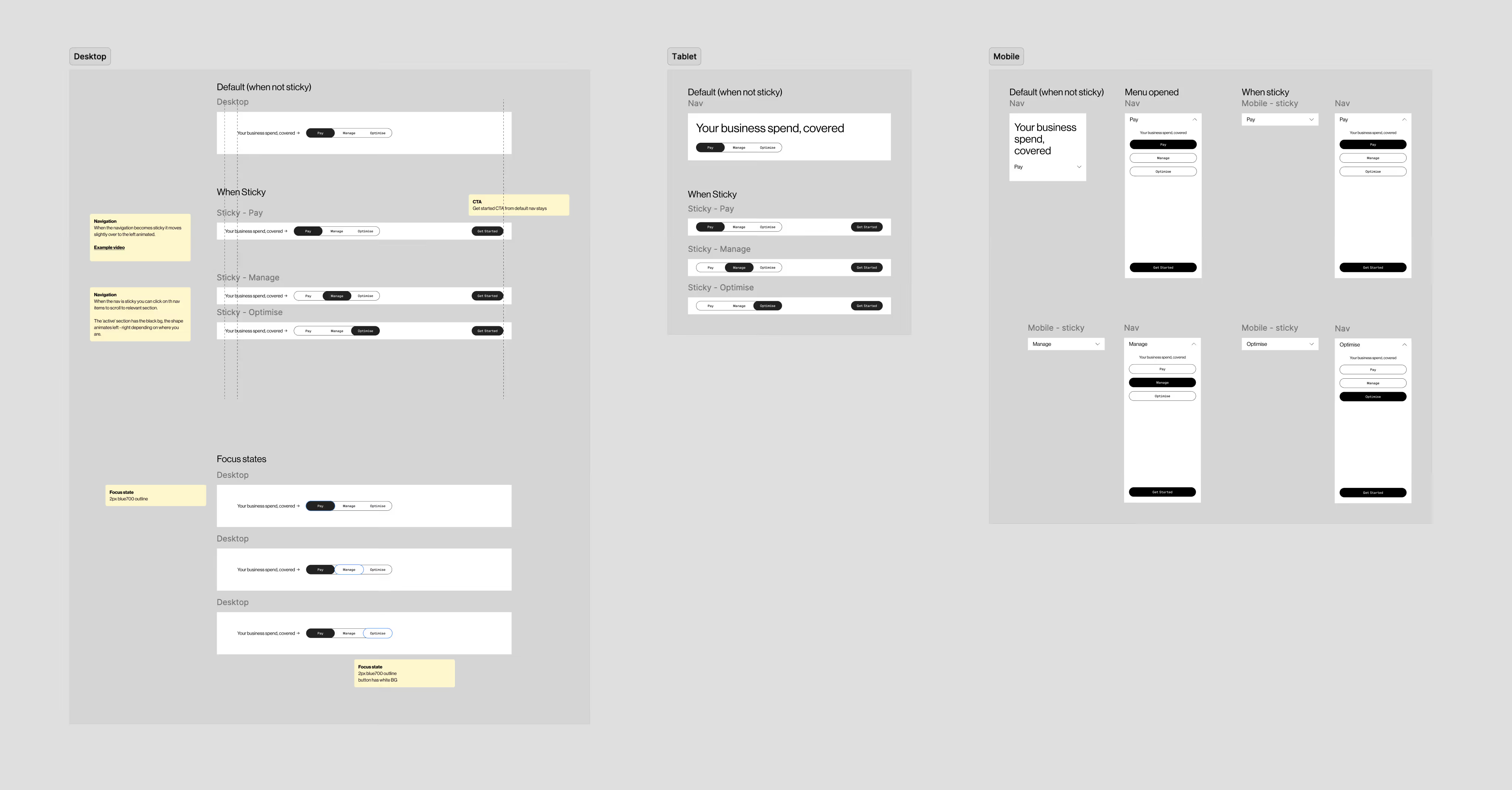
At larger screen sizes I 'hijacked' the main navigation to focus the experience on our value props.

Collaboration

This was a cross-functional effort. I worked closely with:

  • Content & Copywriting: To craft the "Pay, Manage, Optimise" messaging
  • Branding team: To craft updated product imagery and video/animation assets
  • Product Marketing: To ensure alignment with the messaging and upmarket strategy
  • User Research: To run pre-launch sentiment analysis and surveys
  • CRO: To run continuous A/B tests on specific slices, copy, content, trust blocks, and CTA framing
  • Engineering: To implement the designs and manage the complex A/B testing infrastructure.

Rollout & Release Strategy

We used a soft rollout method rather than a standard 50/50 A/B test to mitigate risk.

  • Phasing: We launched to 10% of UK traffic, gradually increasing to 25%, 50%, and finally 100% as confidence metrics (CVR and pipeline) remained stable
  • Lighthouse Market: The UK served as our "lighthouse" market for the initial 100% rollout, followed by localised tests in DE, ES, NL, SE, and DK.
An image of a component in Figma with annotations on all screen sizes
Meticulous annotation for all new components as part of the collab with engineering.

Impact

A foundation for growth

The new homepage successfully refreshed our brand while improving performance in key areas. The English (EN) test attributed 30% increase in conversion +£142K in MRR pipeline, indicating a positive lift in conversion quality. In Germany (DE), reordering sections to "lead with clarity" resulted in a +24% uplift in predicted Value-Add ARR per user.

30%
Increase in conversion
15%
Increase in average value per visit
£142K
Estimated MRR increase

Engagement & Value

UK homepage tests showed a directional uplift of +15% in Average Value per Visit (at 63% confidence), validating our "lead with product clarity" strategy.

Conversion Stability

We successfully rolled out to 100% of UK traffic followed by successful rollout to all markets with no reported negative impact on conversion rates, meeting our primary "do no harm" success criteria.

Reflections

Clarity wins

The strongest quantitative data (the DE and UK value uplifts) supported our design hypothesis that showing the product early ("lead with clarity") drives better downstream value than hiding it behind generic copy.

Metric selection

While we protected CVR (Sign-up Started), the real value of the redesign was seen deeper in the funnel (Pipeline ARR). Measuring success solely by "clicks to signup" would have undervalued the impact of the brand repositioning.

Volume matters

Attempting to validate complex narrative changes in low-volume markets (like Sweden or Spain) via A/B testing proved difficult. Future structural tests should focus on high-volume locales first.

Post launch

Continuous testing

We treated the homepage as a performance surface, running continuous A/B tests on specific slices, hero copy, trust blocks, and CTAs

Narrative expansion

We planned to embed the new narrative ("Pay, Manage, Optimise") into other high-intent pages, such as Pricing, Book a Demo, and Product Demo pages, to ensure consistency across the entire user journey.

Continued Localisation

We continued to refine the localised versions of the homepage, adapting the narrative to fit local market segments better where the initial "one-size-fits-all" translation didn't statistically land.

An image of the homepage hero on desktop in GermanAn image of the homepage hero on desktop in DanishAn image of the homepage hero on desktop in Dutch
"Anyone who’s worked on a SaaS website knows how hard it is to get marketing, sales, product, design, and engineering to agree on anything. They see the world differently. Simon somehow did it, over and over, by keeping everyone focused on one thing - helping customers understand what we sell."

Dima Bykov | Product Design Director | Pleo

Pleo'21—'25

Previously'17—'21

Projects

I’m currently open to new roles,  projects or freelance work

Get in touch